
Brand Marketing Decisions Before Starting a Business.
Billy Bonner
1/14/20264 min read
For businesses just starting out—or for companies transitioning from print to digital—there are several important factors to consider. While more businesses today launch knowing they will operate digitally (and often start digital-first), there are still critical fundamentals that are often overlooked.
Print Design vs Digital Design Considerations
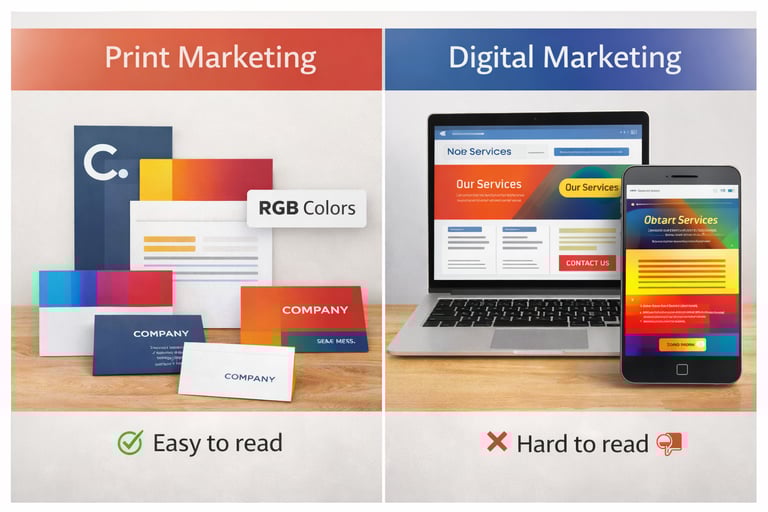
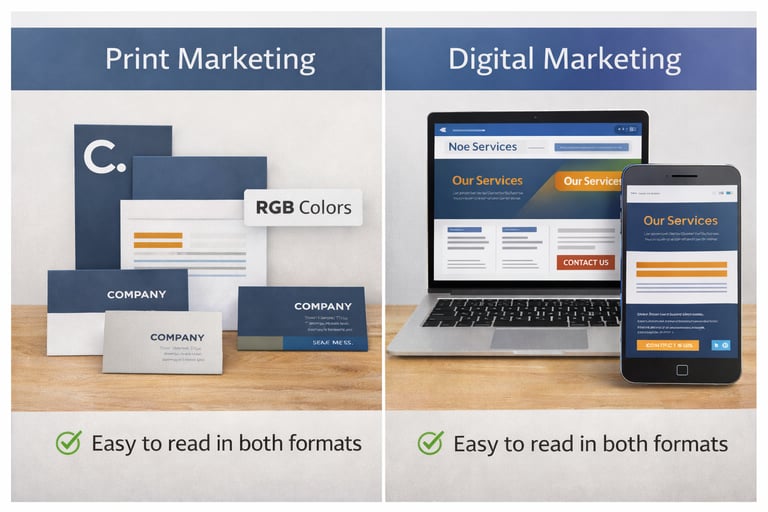
What looks great in print may not look good on the web, and what looks good on the web may not translate well to print. This is because print uses CMYK color profiles, while screens use RGB.
Many people have visited a website and immediately left because it was difficult to read—often due to harsh or poorly contrasting colors. Even if the company offered a great product or service, the site simply didn’t look professional enough to trust.
Many of these businesses are older companies that built their brand through print ads and business cards. Those colors may look great in print, so they tell an inexperienced web designer to reuse them—or they don’t want to change branding, or it isn’t in the budget. Unfortunately, those same colors can perform poorly on screens.
What Must Your Website Do?
What is the point of having a website if it is not selling your product or service?
In the digital age, nearly every business needs a website and a social media presence. Your website should actively help bring in new customers and act as an information hub where people can learn about who you are and what you offer. This also saves you time by answering common customer questions before they ever contact you.
Your Website as a Sales Funnel
A website must work as a funnel that guides visitors toward action. That action may be purchasing a product or requesting a service.
Answer Customer Questions Clearly
For example, your company might be a construction business that does windows, floors, and walls—but not plumbing. The key is to clearly list the services you do provide and explain what you don’t. You can also mention that you work with reputable plumbers you trust and refer customers to, and who may also refer customers back to you.
Clear information builds trust.
Being Findable on the Web (SEO Matters)
You cannot accomplish any of the above if people cannot find your website. This is where things get more difficult.
If you are a contractor, there may be thousands of similar businesses nationwide and dozens in your local service area. SEO techniques help your business stand out in search results.
The days of the Yellow Pages are long gone, where customers chose companies based on who paid for an ad or whose name started with an “A.” Today, visibility depends on how well your website is built and optimized.
Choosing Web-Friendly Fonts for Your Brand
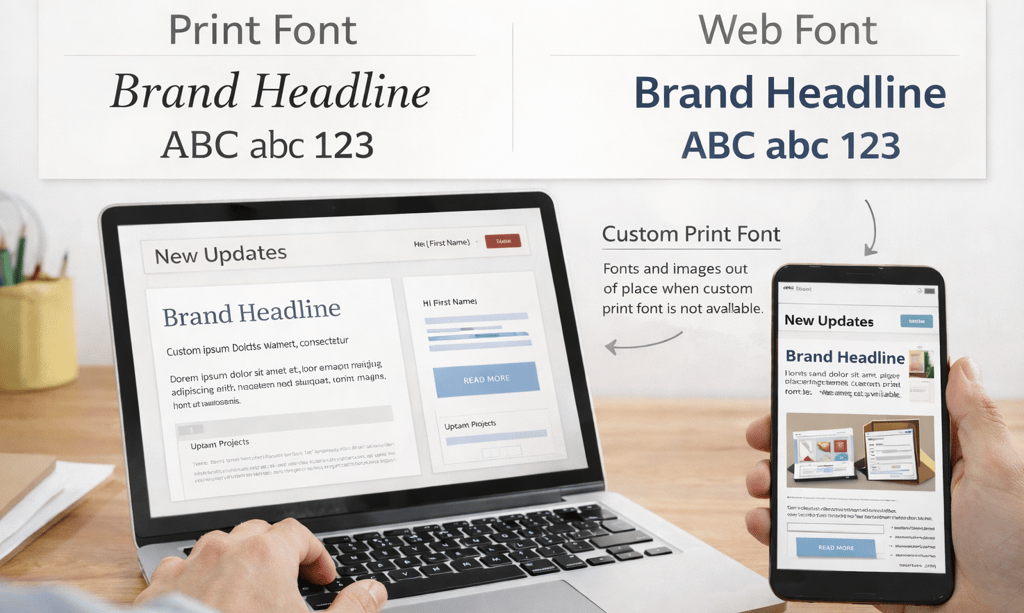
If you are an established company building a website for the first time, your existing brand font may not be web-friendly.
You can embed and host custom fonts, but doing so may slow website load times. It also creates challenges if you plan to send newsletters. If the recipient’s computer doesn’t have that font installed, the design may not display as intended.
Using web-safe fonts or Google Fonts is often the better long-term choice if you want consistent branding across:
Websites
Newsletters
Digital marketing materials
If you’ve invested heavily in print branding, consider choosing a web font that closely resembles your print font and gradually transitioning your print materials to match.
Logos and Fonts
This does not necessarily mean you need to change your logo. Logos are typically uploaded as image files. Just be sure to:
Properly name the logo file
Add descriptive title text
Include alt text that explains what the logo says
This also helps with SEO and accessibility.
SEO Optimization from the Start
Many small startups don’t have the time or budget to build a website the “right” way. They hire someone, set a budget, and focus on simply getting online. The problem is that if no one can find the site, it’s not doing its job.
It is often better to have a simple website that is properly SEO optimized than a complex site that is not. A well-built foundation makes a huge difference in long-term visibility.
Don’t Be Too Fussy About Your Website
This doesn’t mean your website shouldn’t look professional. It should—but it needs to be perfect in the eyes of the customer, not based on your personal taste. This is important.
Once you start requesting custom code and moving elements around purely for aesthetic reasons, costs rise quickly. You also risk ending up with a slow, bloated website that doesn’t load well or display properly on different devices and sometimes depending on the developer it can be difficult for someone to take over.
This ties back to earlier points such as using web-friendly fonts and layouts. What’s the point of having the most beautiful website if it doesn’t convert visitors into customers?
Do It Yourself, Hire a Freelancer, or Use an Agency?
Starting a business takes both time and money—and most startups don’t have much of either.
A full-time or even part-time marketer can often be the best solution. An agency may be too expensive, and unless they understand your niche, you may not get the best value. A freelancer can be a hybrid option—someone who can come in, get things set up correctly, and help you build momentum.
I’ll go deeper into this topic in a future post.
How I Can Help Your Business Go Digital
If you’re starting a business or trying to improve your digital presence, I’d be happy to hear about what you’re working on. Use my contact form and I’ll offer some advice.
I’m currently offering a starter service, where I help get your website set up correctly from the beginning. I can also show you how to maintain your site yourself. Website platforms and hosting tools have become much easier to use, but if you’ve never built a site before, having someone set it up properly—and teach you how to manage it—can save you a lot of frustration.
Feel free to reach out. I’d be happy to chat and see if I can help.